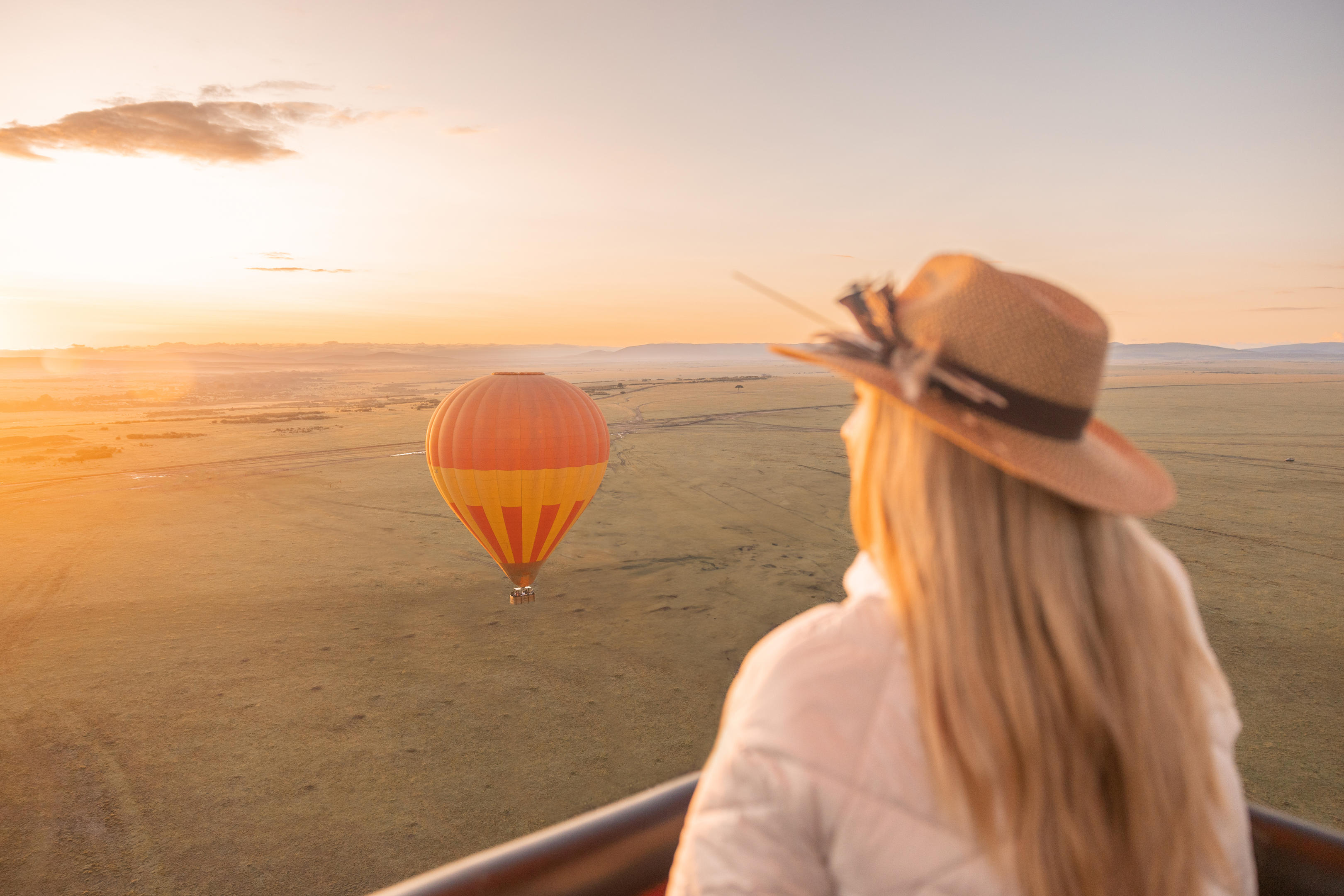
Early Morning
Hot Air Balloon Safari
Launch at dawn, floating silently over the plains as the sun rises and the animals wake. Followed by a champagne breakfast cooked out in the bush under an acacia tree.
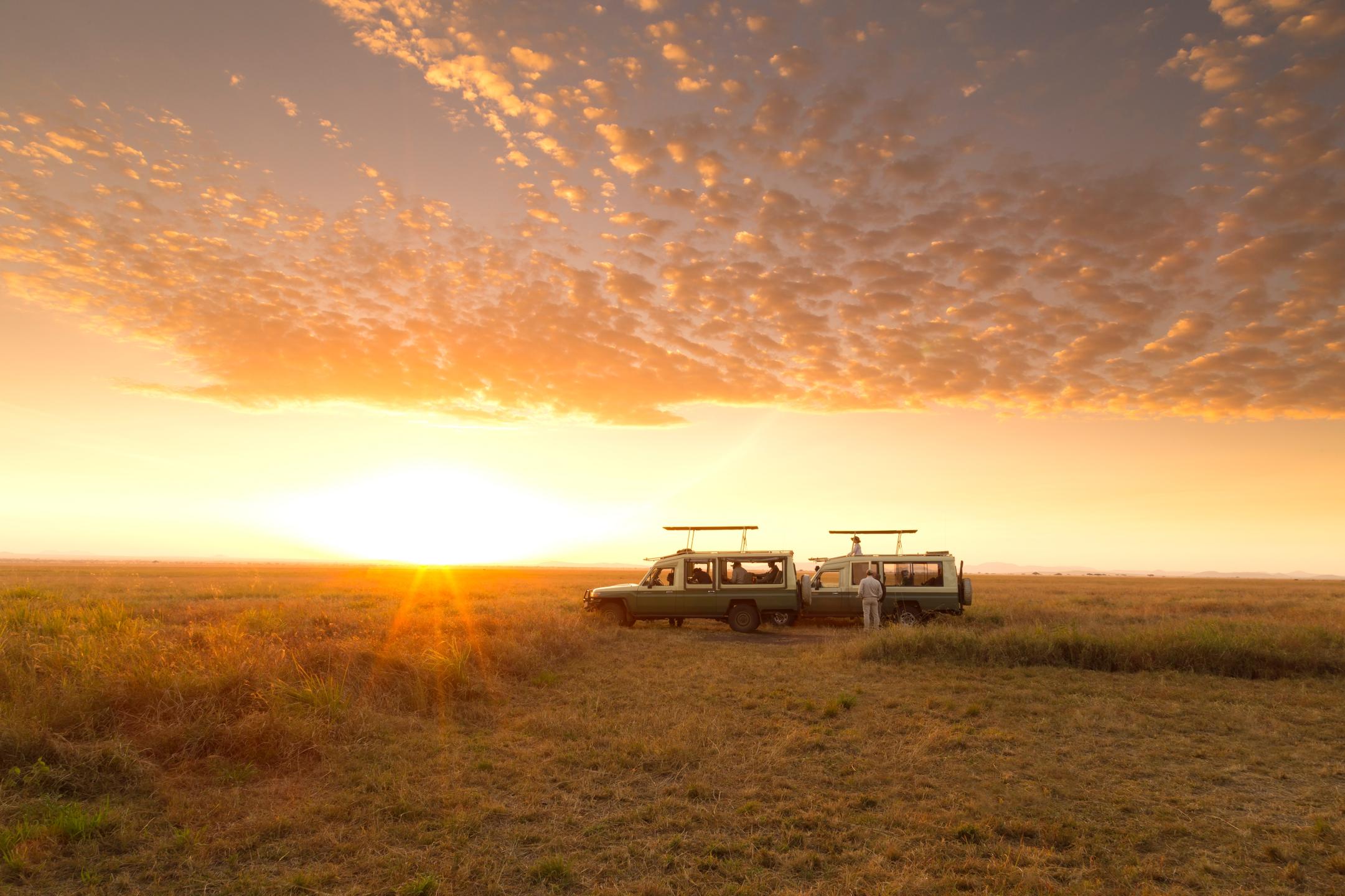
The greatest wildlife spectacle on the planet. Endless savanna, dense populations of big cats, and the thunder of two million hooves. The undisputed crown jewel of African safaris.
In the Maasai language, "Siringet" means "the place where the land moves on forever." It is a fitting name for the oldest and most famous national park in Tanzania, a sweeping expanse of acacia-studded savanna that stretches as far as the eye can see.
For our guests, the Serengeti is the crescendo — the core of the Northern Circuit journey. Whether you are tracking the Great Migration across the Mara River, watching cheetahs sprint across the Namiri Plains, or falling asleep to the distant roar of a lion in Seronera.
This page is our operator's full guide to the park: the distinct regions, the seasonal movements of the herds, the experiences worth waking up early for, and every one of our Serengeti-linked packages — from quick fly-ins to grand 10-day overland tours.
The Serengeti is not a single landscape. It changes dramatically from the short-grass plains of the south to the woodlands of the north.
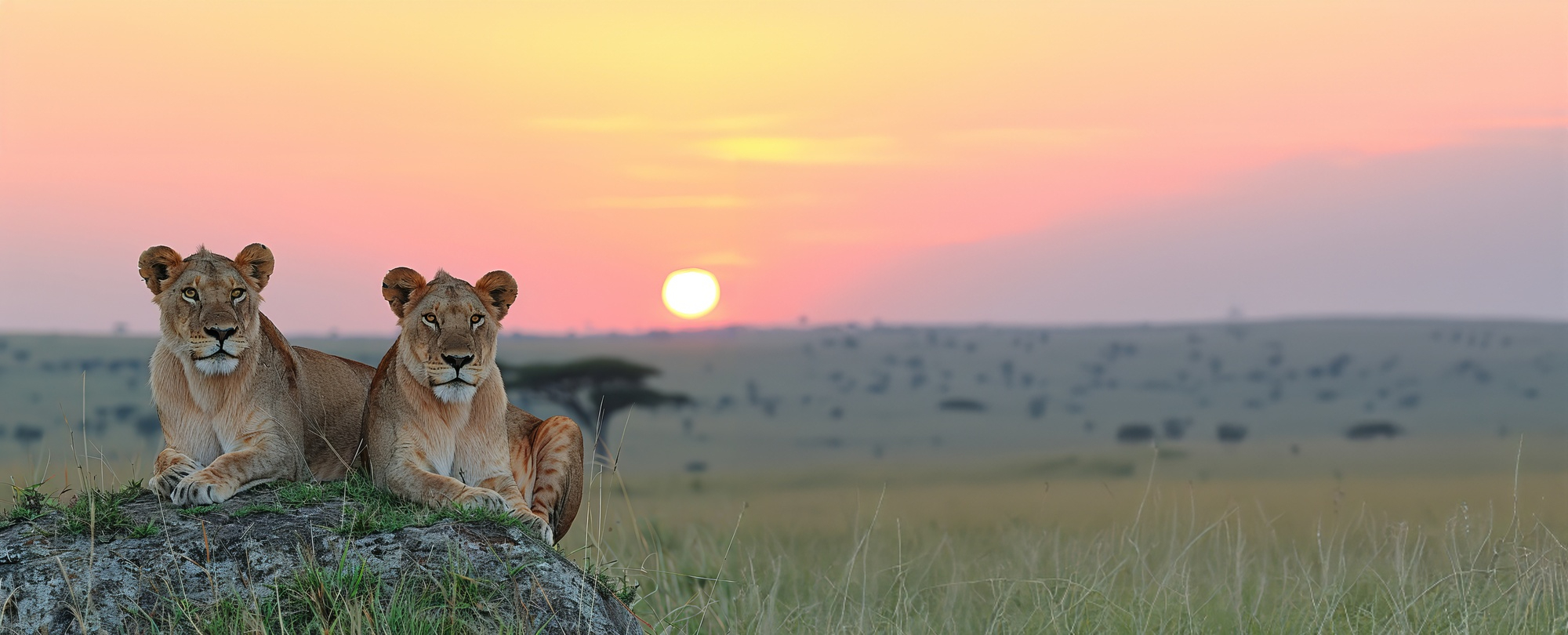
The heart of the park. Renowned for dense leopard populations in the sausage trees and massive lion prides around the kopjes.
Discover Seronera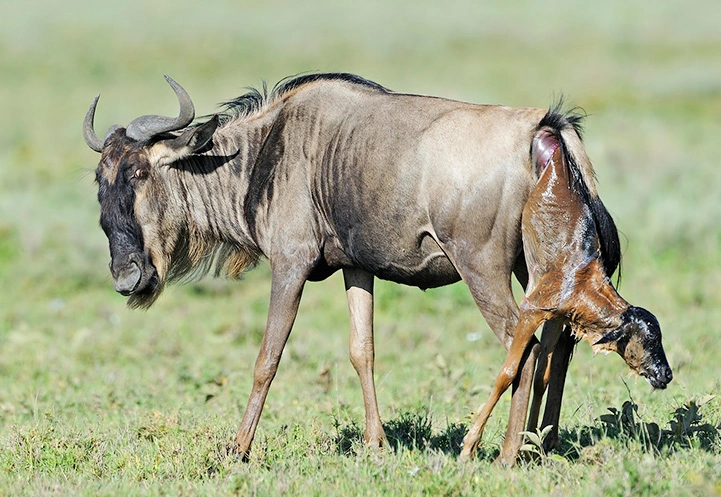
The short-grass plains. Ground zero for the great calving season from Jan-Mar.
Explore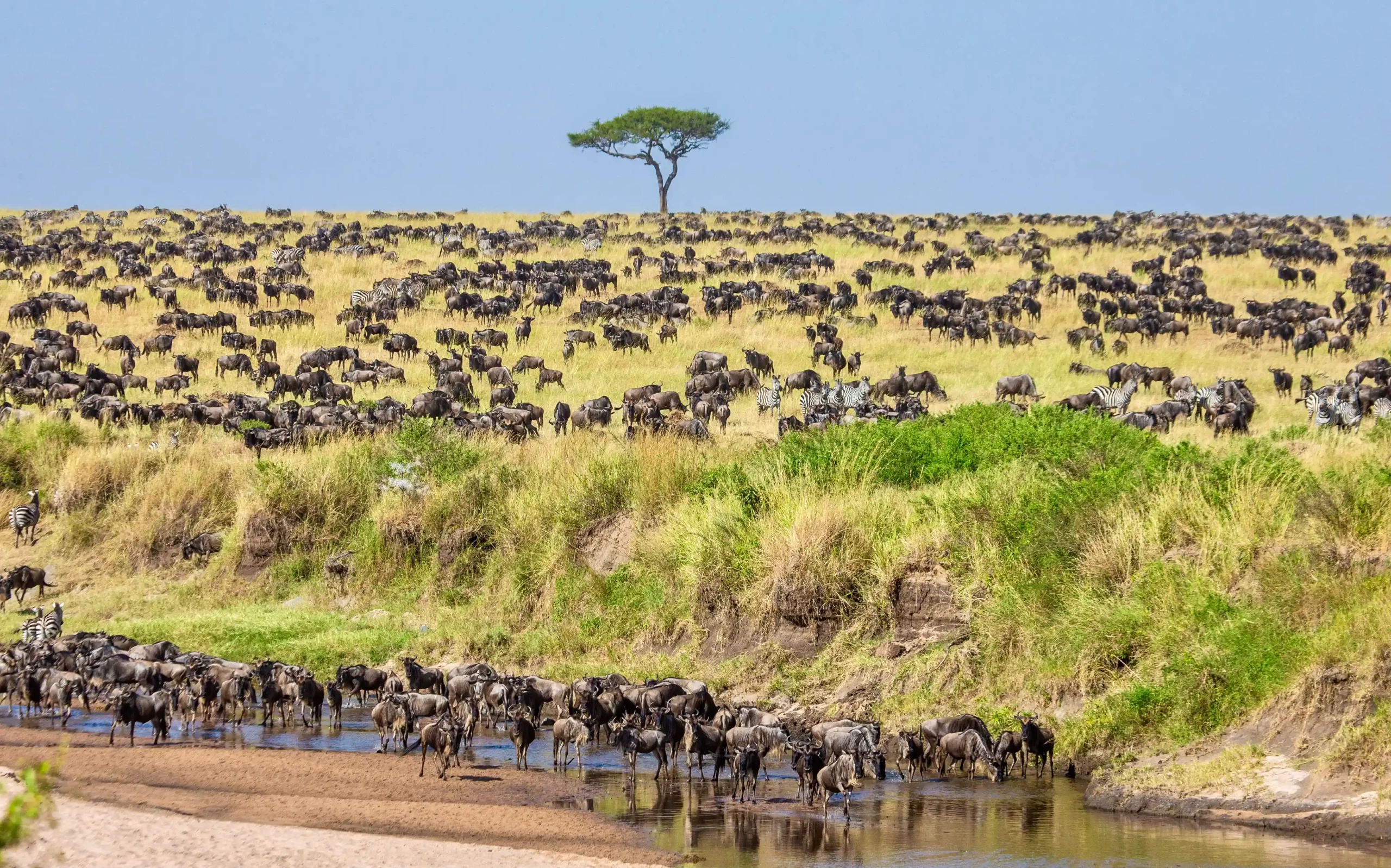
The Mara River. Home to the dramatic river crossings (Jul-Oct).
Explore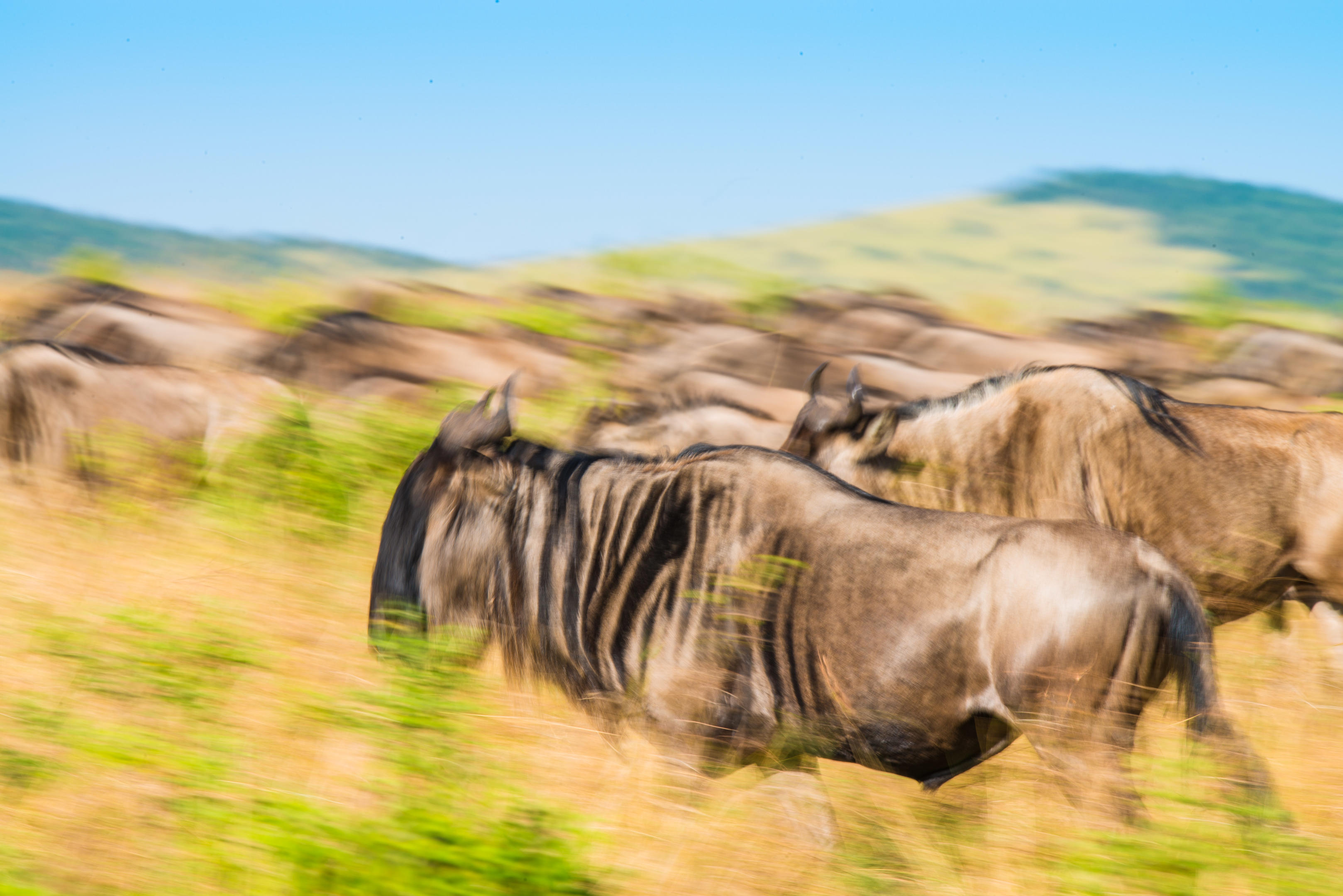
The Western Corridor. First major hurdle for the migration (May-Jun).
Explore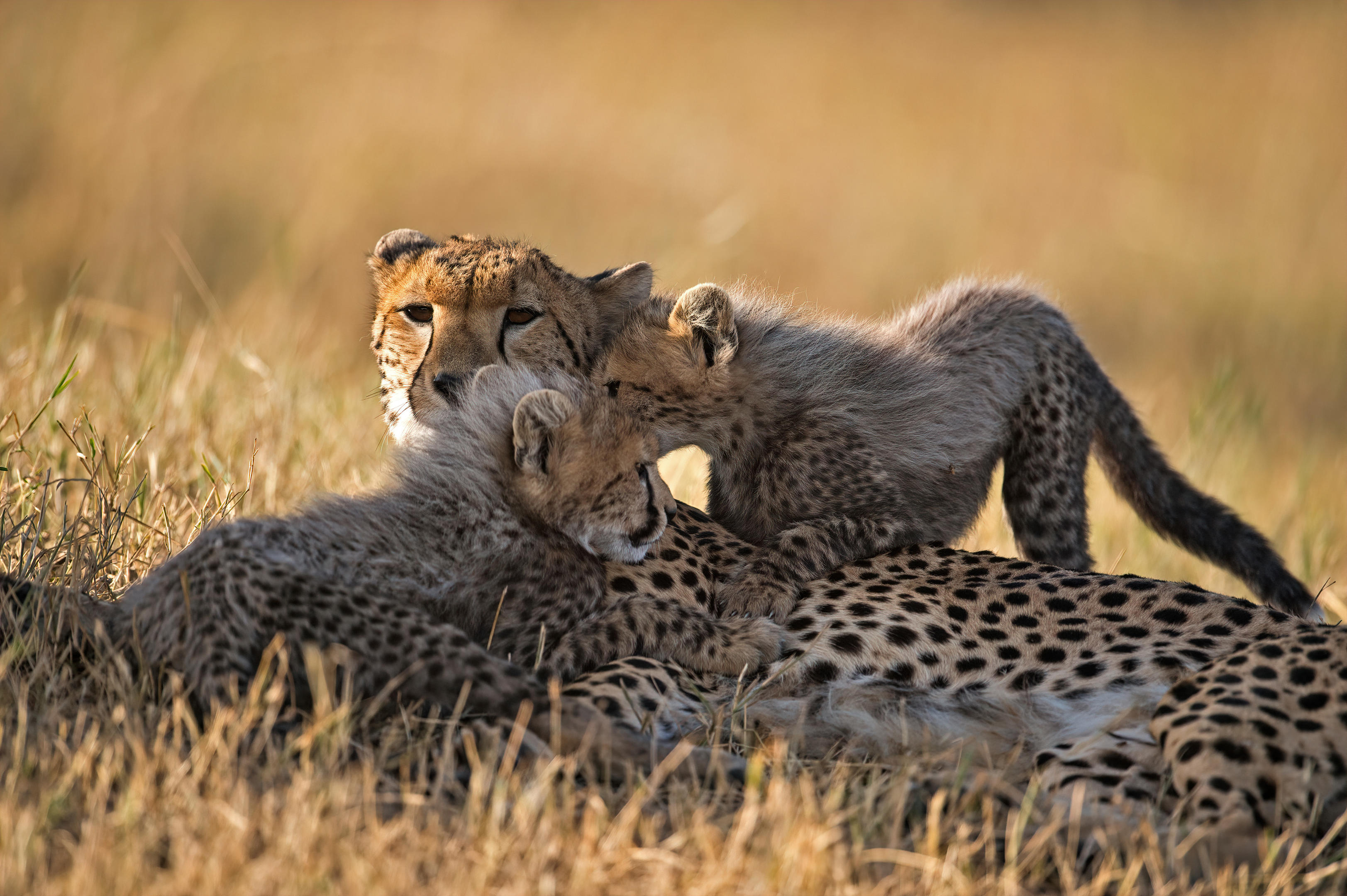
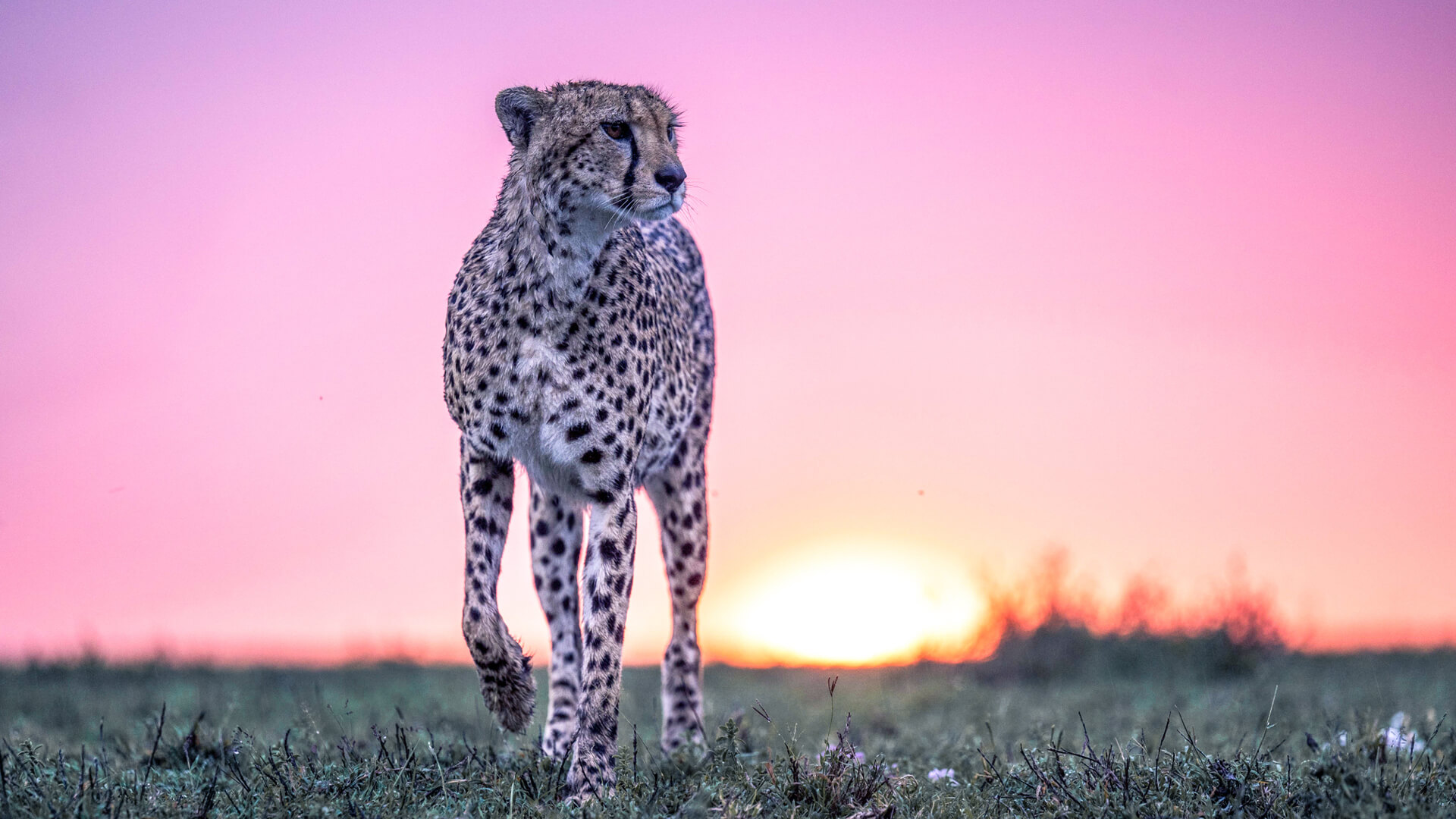
Secluded Eastern plains. Exceptionally high cheetah density and zero crowds.
Explore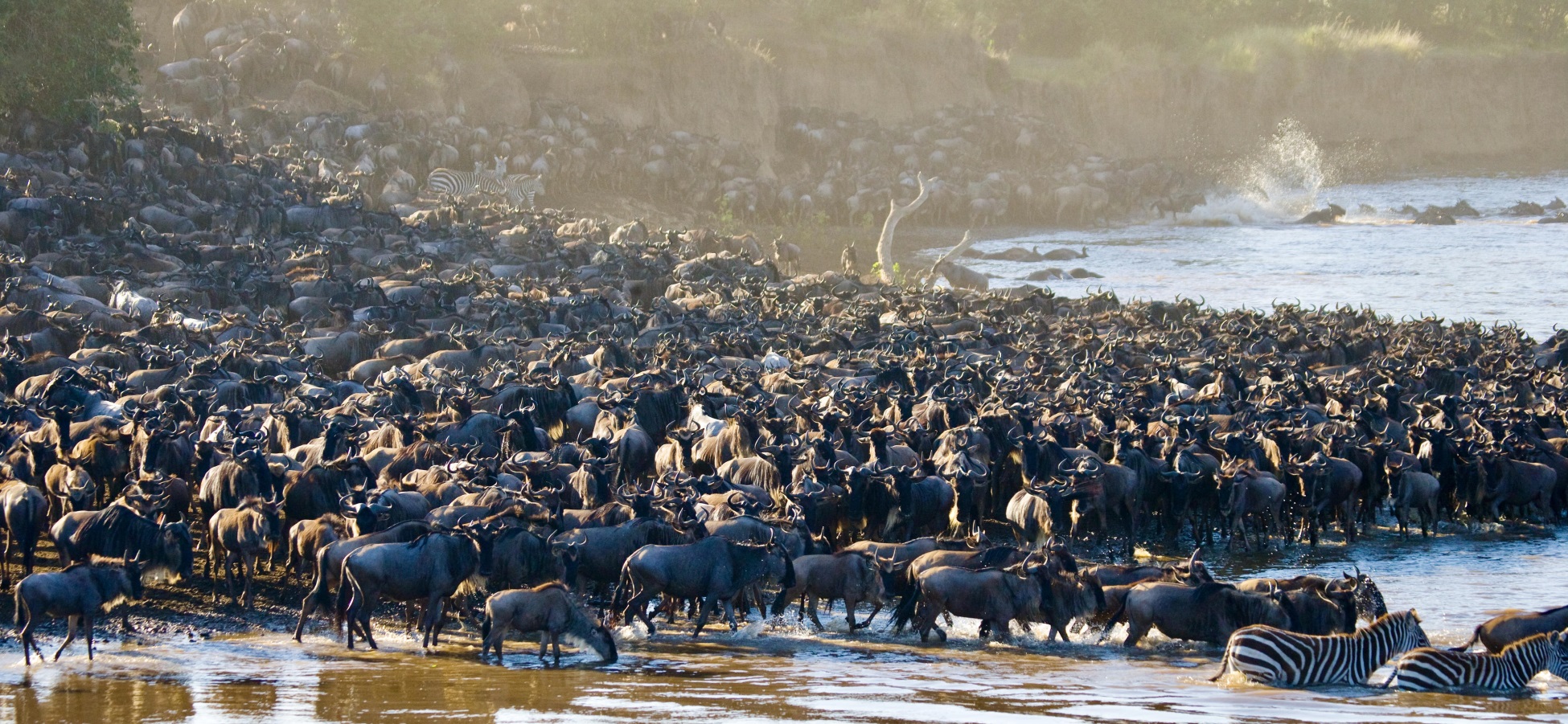
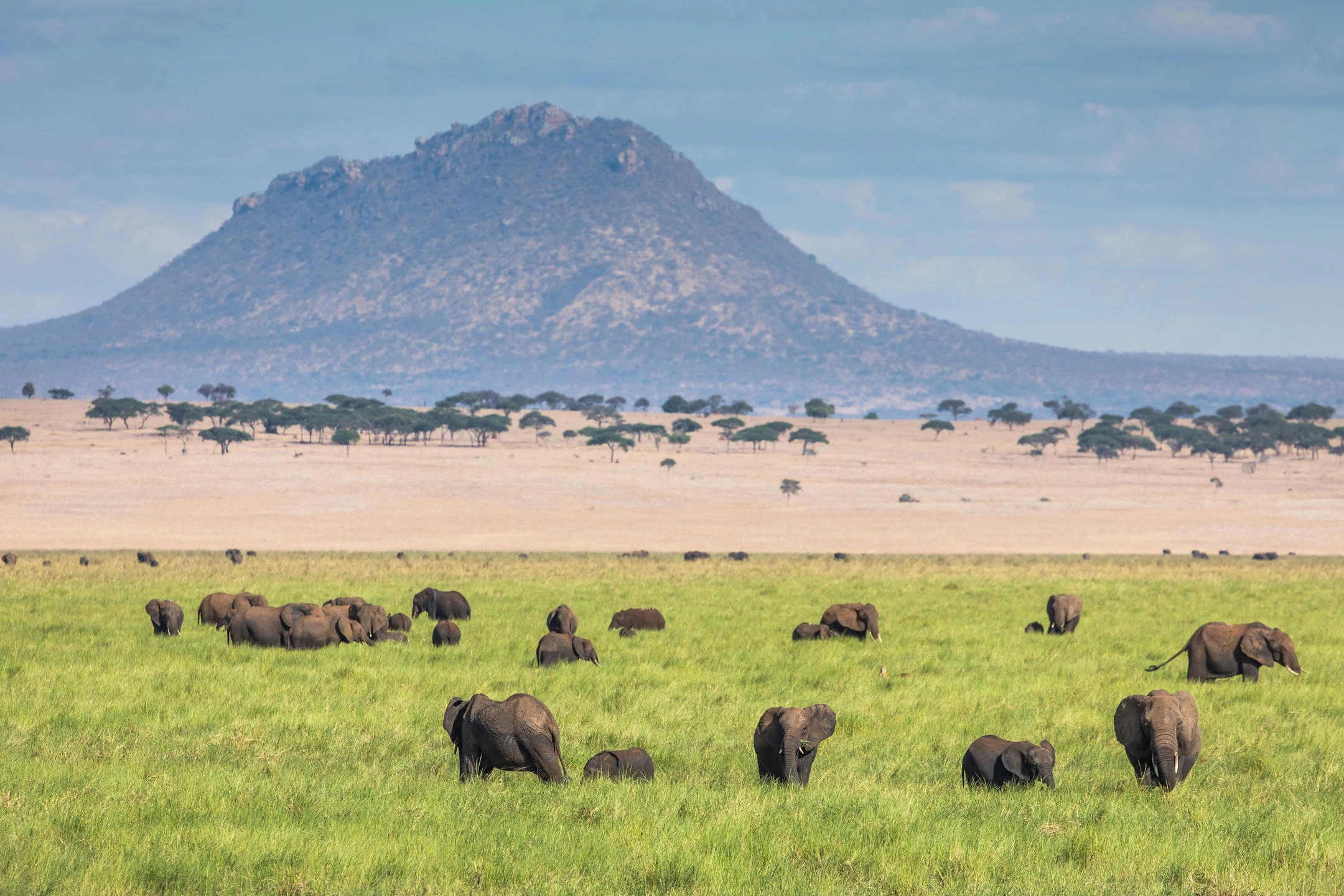
Two million wildebeest, zebra, and gazelles moving in a continuous, year-round cycle in search of fresh rain-ripened grass.
Track the Herds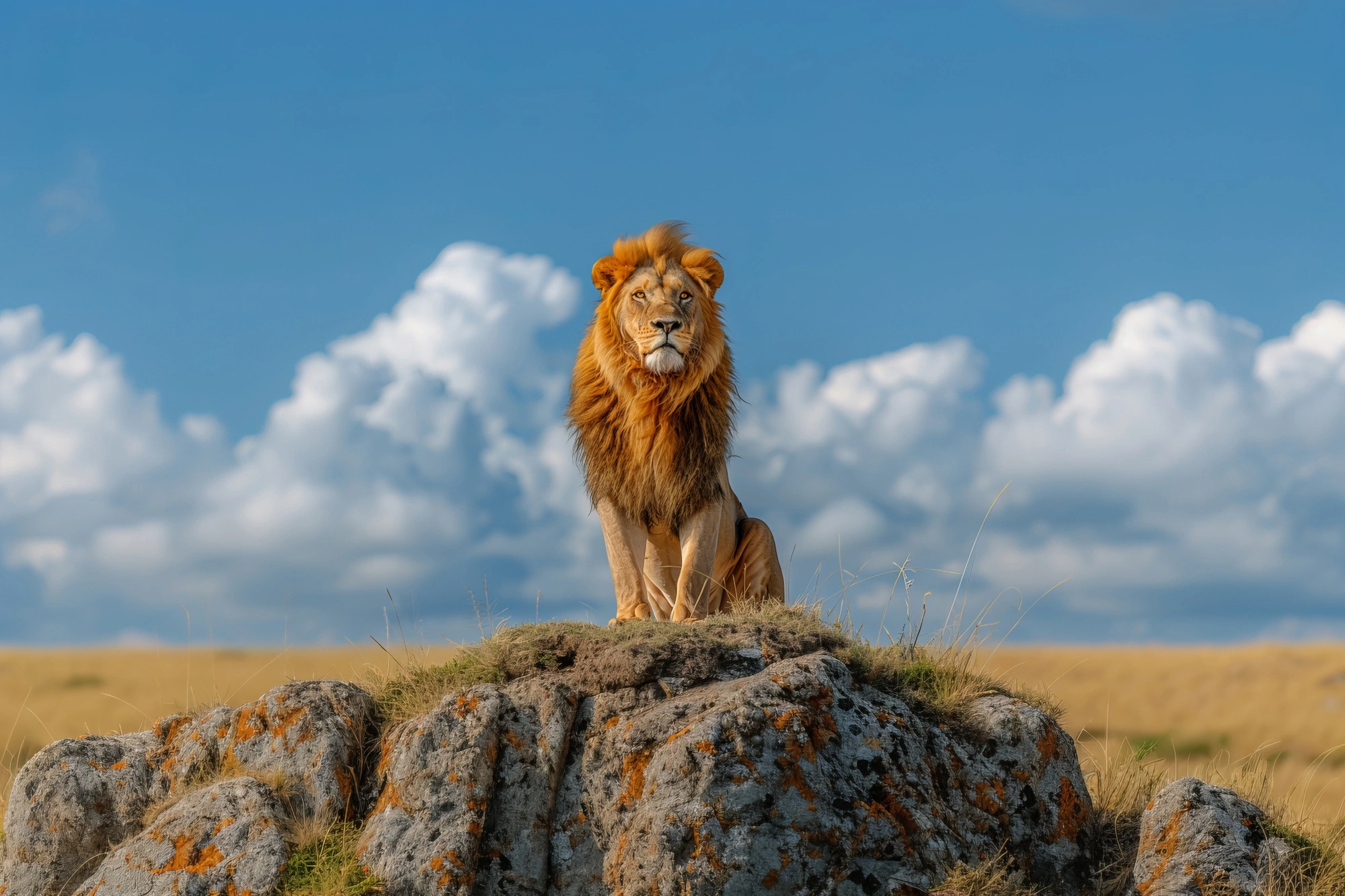
The Seronera Valley is the heart of the Serengeti. Thanks to its permanent water sources, wildlife remains abundant here year-round, regardless of where the Great Migration currently is. It is famous for its rocky outcrops (kopjes) which serve as perfect observation points for lion prides.
This is arguably the best place in Africa to spot leopards, who drape themselves over the branches of the yellow fever trees lining the riverbanks. It's bustling with wildlife, meaning it's also the busiest part of the park—but the sightings are entirely worth it.
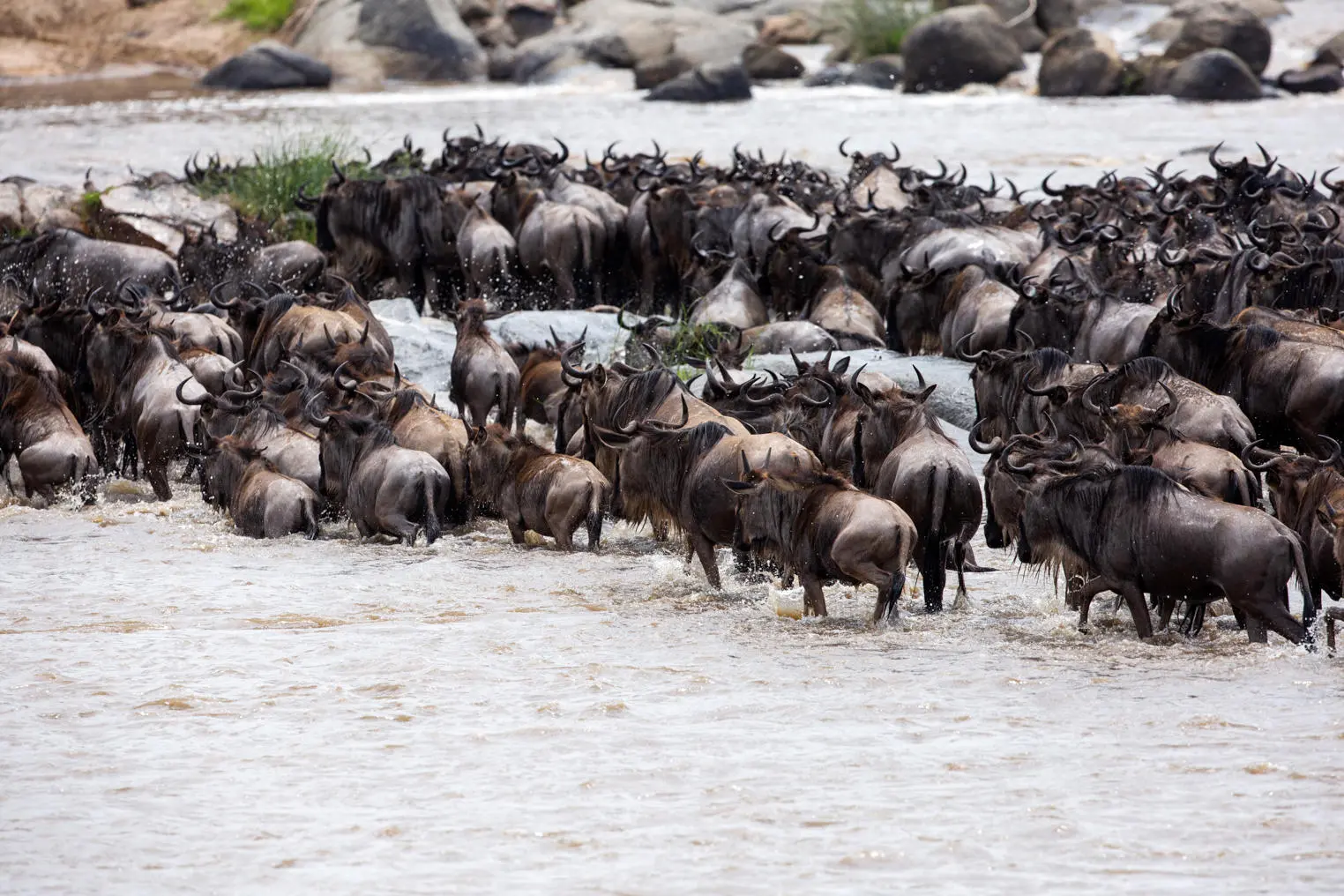
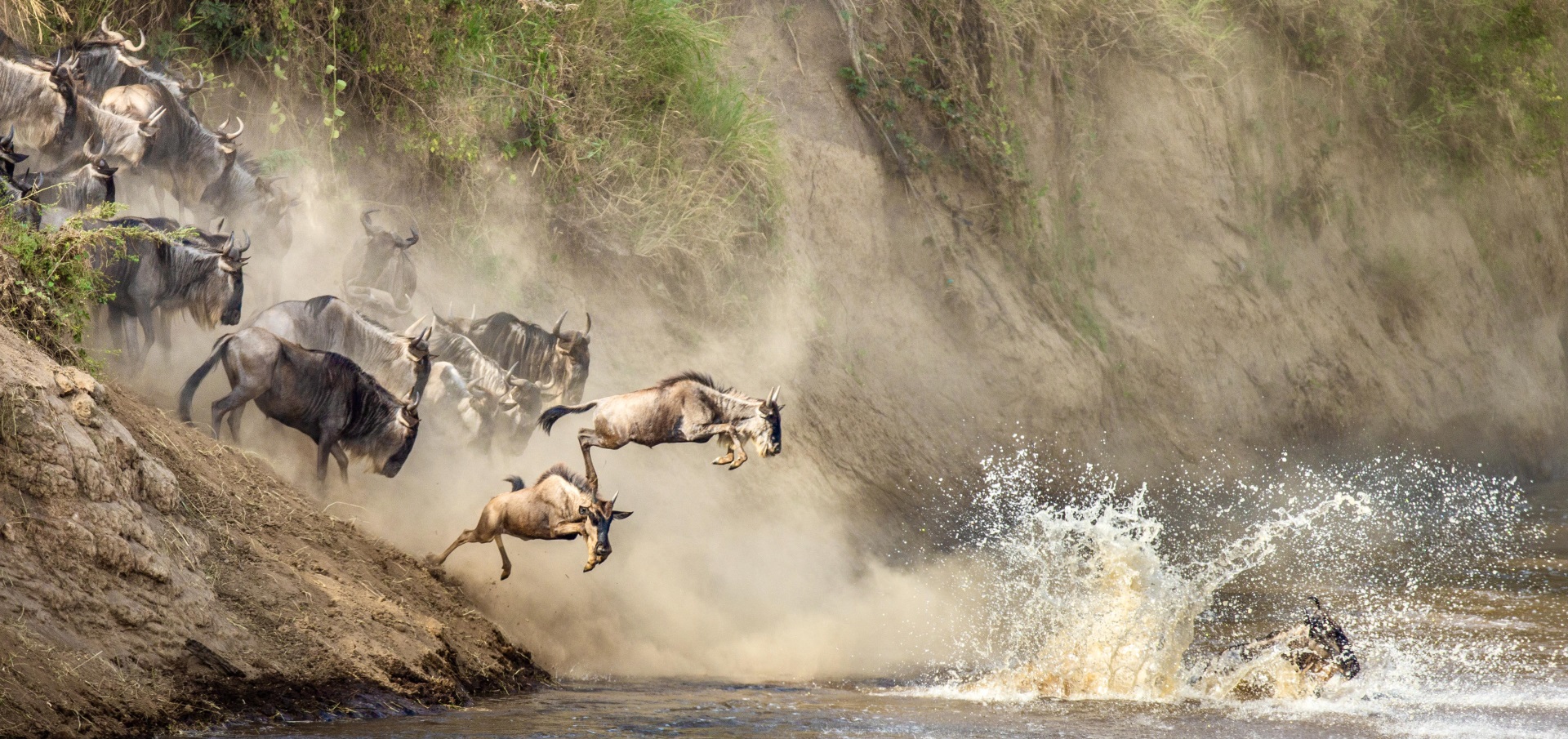
Between July and October, the northern reaches of the Serengeti become the stage for nature's most dramatic theater. Over a million wildebeest mass on the banks of the Mara River, hesitating before plunging into the crocodile-infested waters to reach the Masai Mara.
Watching a river crossing requires patience. You might wait hours by the riverbank, but when the panic breaks and the first animals leap, the chaos, noise, and sheer instinctual drive of the herds is an unforgettable spectacle.
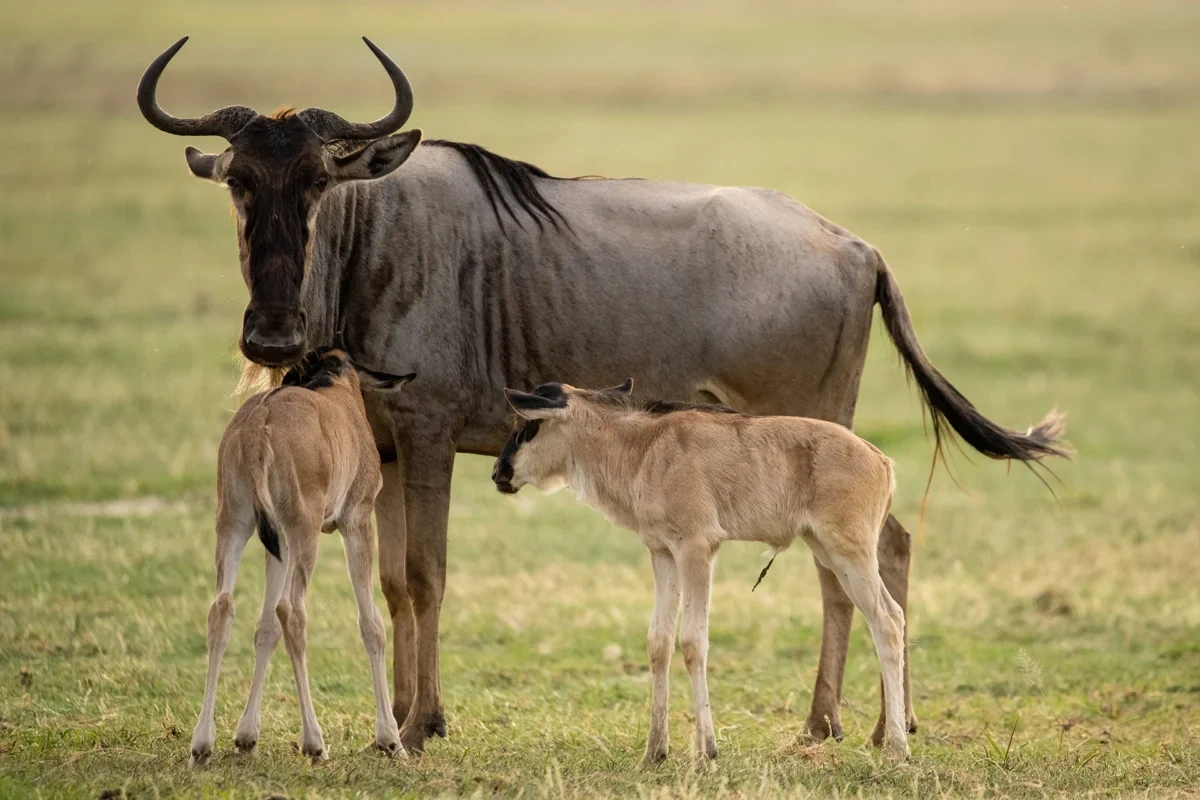
As the short rains fall around December, the mega-herds move south to the mineral-rich short-grass plains of Ndutu (which bridges the Serengeti and Ngorongoro boundaries). Between late January and early March, an astonishing 8,000 calves are born every single day.
This explosion of new life naturally draws every predator in the ecosystem. It is the best time and place for action-packed game viewing, with cheetahs utilizing the open plains to hunt, and hyenas and lions stalking the vulnerable calves.
From quick 3-day fly-in safaris from Zanzibar to our comprehensive 8-day Northern Circuit route. All packages below are bookable and operator-built.
 3 Days
Fly-In Safari
3 Days
Fly-In Safari
Arusha/Zanzibar → Serengeti → Fly Out
Short on time? Fly directly into the heart of the park via bush plane. Two nights of intensive big-cat tracking in Central Seronera with your private guide before flying back.
 6 Days
Signature Migration
6 Days
Signature Migration
Tarangire → Ngorongoro → Serengeti (3N)
Our most popular mid-length safari. We position your mobile tented camp exactly where the mega-herds are—whether in Ndutu, Grumeti, or the Mara River.
 5 Days
Classic Circuit
5 Days
Classic Circuit
Arusha → Tarangire → Serengeti (2N) → Ngorongoro
The ultimate deep-dive. Ample time to explore both the predator-rich Central Serengeti and track the Migration herds. Perfect for photographers and purists.
The park changes dynamically throughout the year as the migration circles the ecosystem.
The herds mass in the Ndutu region. 8,000 calves born daily. Incredible predator action as cheetahs and lions hunt vulnerable young.
Heavy rains turn the plains emerald green. The herds trek through Seronera toward the Western Corridor. Lush photography and lower camp rates.
The mating season (the rut) begins. The herds face their first river obstacle at the Grumeti River, braving giant crocodiles as they head north.
The dramatic climax. The herds cross back and forth over the Mara River, creating the iconic, chaotic scenes of survival. High season.
Specialized activities we can weave into your Serengeti itinerary.
Launch at dawn, floating silently over the plains as the sun rises and the animals wake. Followed by a champagne breakfast cooked out in the bush under an acacia tree.
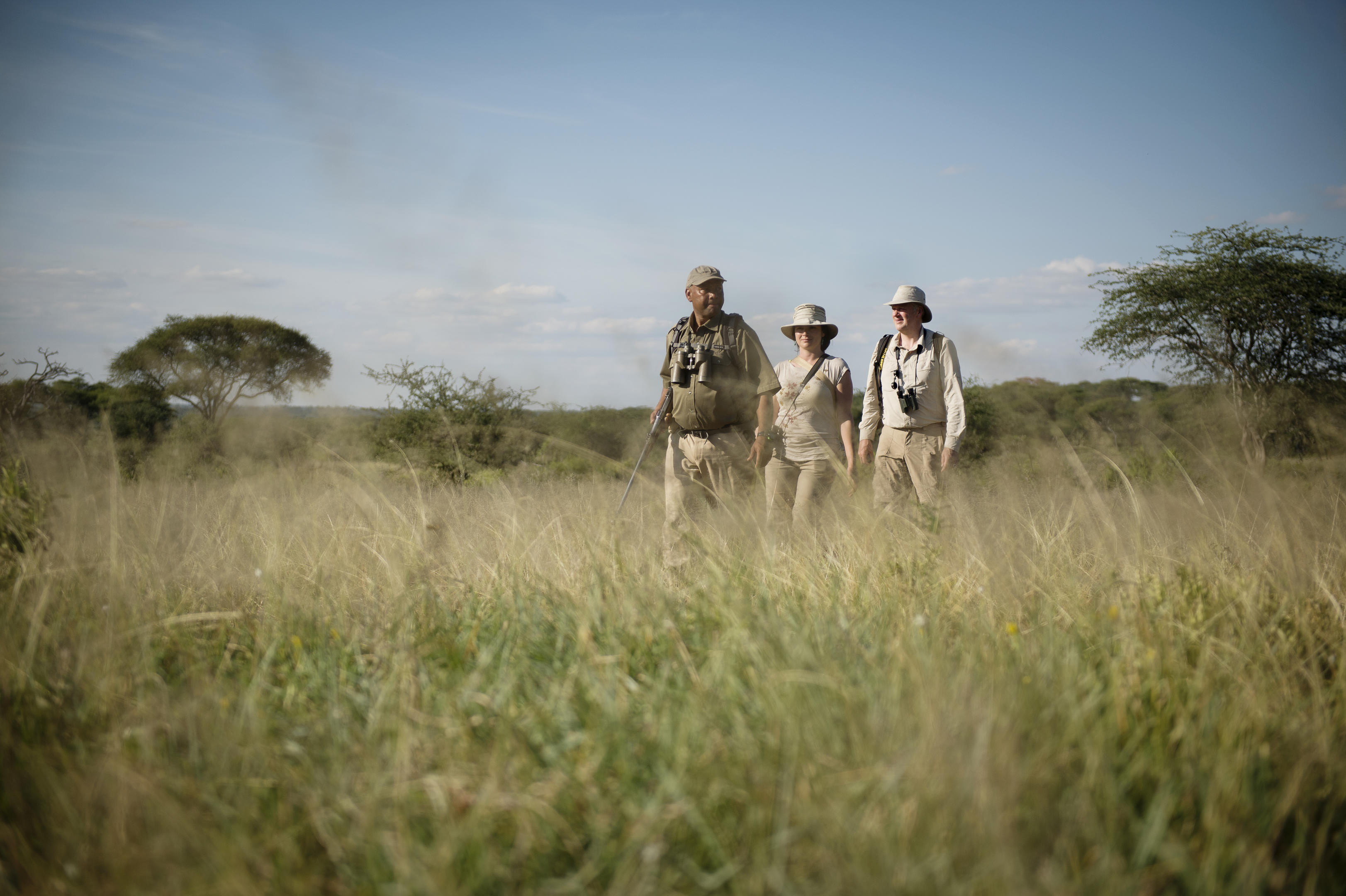
Leave the 4x4 behind. Accompanied by an armed ranger, learn to read tracks, identify scat, study micro-ecosystems, and approach grazing wildlife on foot. (Available in specific zones).
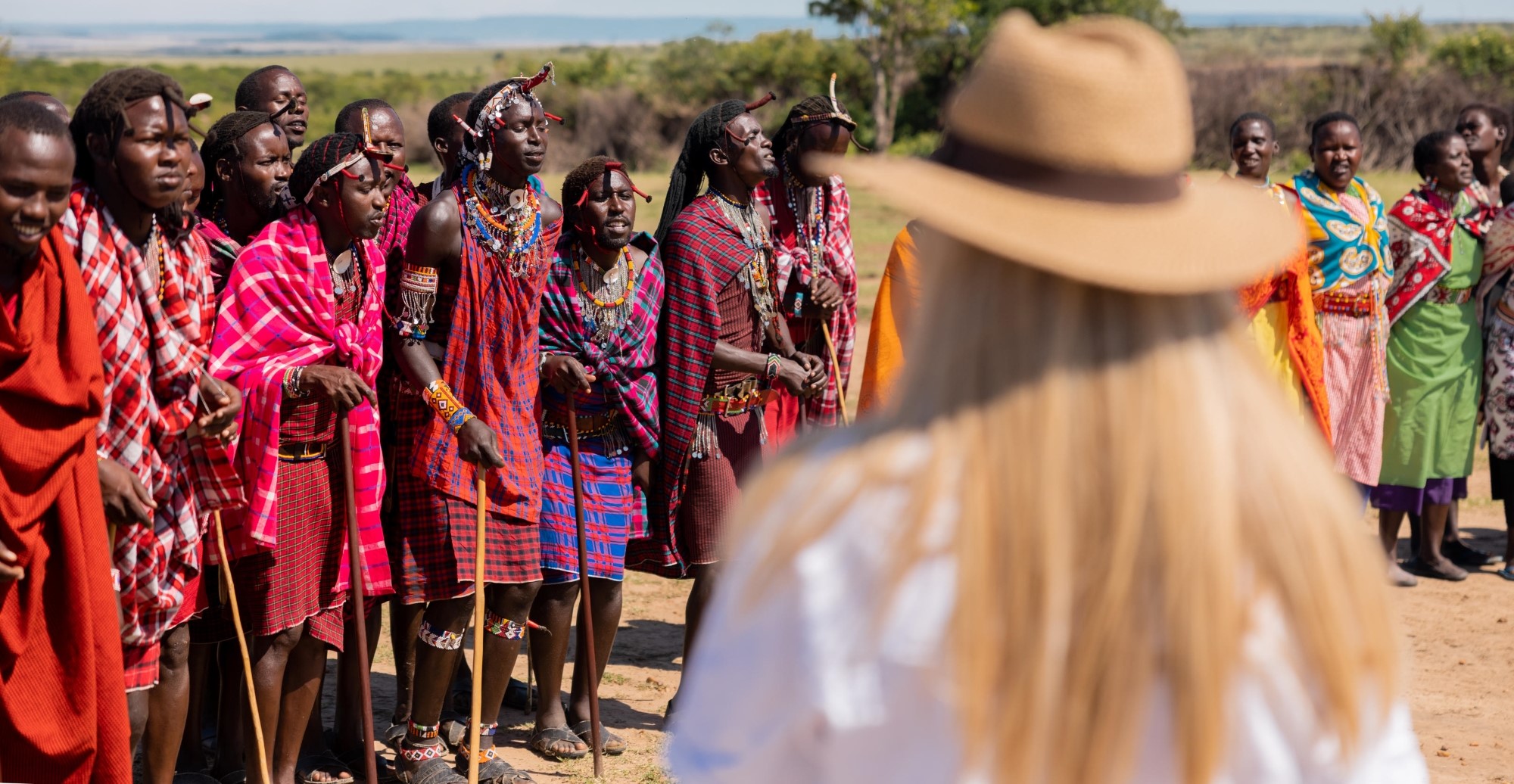
En route to or from the Serengeti via the Ngorongoro Conservation Area, visit a traditional Maasai village. Learn about their pastoral way of life, traditional jumping dance, and beadwork.
The quick-reference logistics to help you plan.
What guests frequently ask us before booking their Serengeti adventure.
The migration is a year-round cycle. To see the Mara River crossings in the North, visit between July and October. To witness the calving season in the South (Ndutu), January to March is best. The rutting season in the Western Corridor peaks in June.
We recommend an absolute minimum of 3 nights to do the park justice, though 4 to 5 nights is ideal. This allows you to explore multiple regions, such as combining the central big cat territory (Seronera) with tracking the migration herds further north or south.
Driving from Arusha takes 6-7 hours and allows you to see the Ngorongoro Conservation Area along the way. Flying via light aircraft takes just 45-90 minutes and lands you directly in the park, saving time. Many guests choose a hybrid: drive in through the parks, and fly out on the last day.
No. The Serengeti is a completely open, unfenced ecosystem covering nearly 15,000 square kilometers. Wildlife moves freely across the plains and seamlessly into the neighboring Masai Mara in Kenya and the Ngorongoro Conservation Area.
Yes, the Serengeti is fantastic for families. Most standard lodges welcome children of all ages, though some luxury remote tented camps have age limits of 6+ or 12+. We specifically tailor family safaris with private vehicles to give you complete flexibility with game drive durations.
Absolutely — it's our most popular itinerary pairing. There are daily direct flights from the Serengeti airstrips (like Seronera or Kogatende) straight to Zanzibar, meaning you can have breakfast watching lions and be swimming in the Indian Ocean by sunset.